Commencing
Every climbing complexity among state-of-the-art machines asks for an detailed awareness of diagnostic apparatuses, primarily with respect to On-Board Diagnostics II (OBD2) and Tire Pressure Monitoring Systems (TPMS). In Europe, Asia, and the US, these innovations perform using heterogeneous frequencies. OBD2 directives are largely synchronized globally, essentially utilizing ISO 9141-50, KWP2000, CAN, and others, but regional implementations can pose minor discrepancies. TPMS, however, is where notable frequency differences emerge. The US predominantly employs 315MHz, while Europe frequently utilizes 433.92MHz, and Asia reveals a more dispersed range including both frequencies and supplementary bands. Hence, exact diagnostic devices must be furnished with the potential to process these various frequencies to enable effective troubleshooting and maintenance.
Decoding TPMS Sensor Frequencies: A Global Guide (Europe, North America, Asia)
Mastering rubber measuring apparatus (TPMS) detector signals throughout the globe is hard. Habitually, North lands largely utilize 315 MHz, whereas some modern vehicles employ 433 MHz. Yet, Europe and most of Asia generally perform on the 433 MHz channel, with some area variations existing significantly in definite Asian territories. This is, central to ensure the right band prior to securing TPMS detectors to guarantee conformity and skip likely hurdles.
EV Diagnostic Tools: OBD2 Compatibility and TPMS Integration
State-of-the-art electrical car evaluation equipment are increasingly combining essential functionality, principally related to both standard On-Board Diagnostics II (OBD2) compliance and Tire Pressure Monitoring System (TPMS) linking. Plenty of battery-powered cars utilize OBD2 ports for collecting key system figures, permitting technicians and caretakers to pinpoint imminent faults. Furthermore, flawless TPMS association provides true tire tension values, furthering to heightened safety and diesel conservation. This collaboration of OBD2 capabilities and TPMS service indicates a noteworthy leap in electrified ride troubleshooting.
Tire Pressure Frequency Distinctions: Eurasia vs. American Continent vs. Asia - A Comprehensive Inspection
The mechanisms responsible for supervising tire pressure—TPMS—operate on unique radio signals, leading to essential regional differences. USA predominantly utilizes 315 MHz, though some advanced vehicles are transitioning to 433 MHz. Western Europe mandates 433.92 MHz, a distinct frequency to certify compatibility across nations. Far East exhibits a intricate landscape, with specific zones using 315 MHz, others 433 MHz, and still some places employing a fusion of both. This distinction results in challenges for service points and operators when dealing with replacement TPMS transmitters or diagnostic machinery, involving careful assessment of regional specifications to avoid problems and promote proper operation of the TPMS.
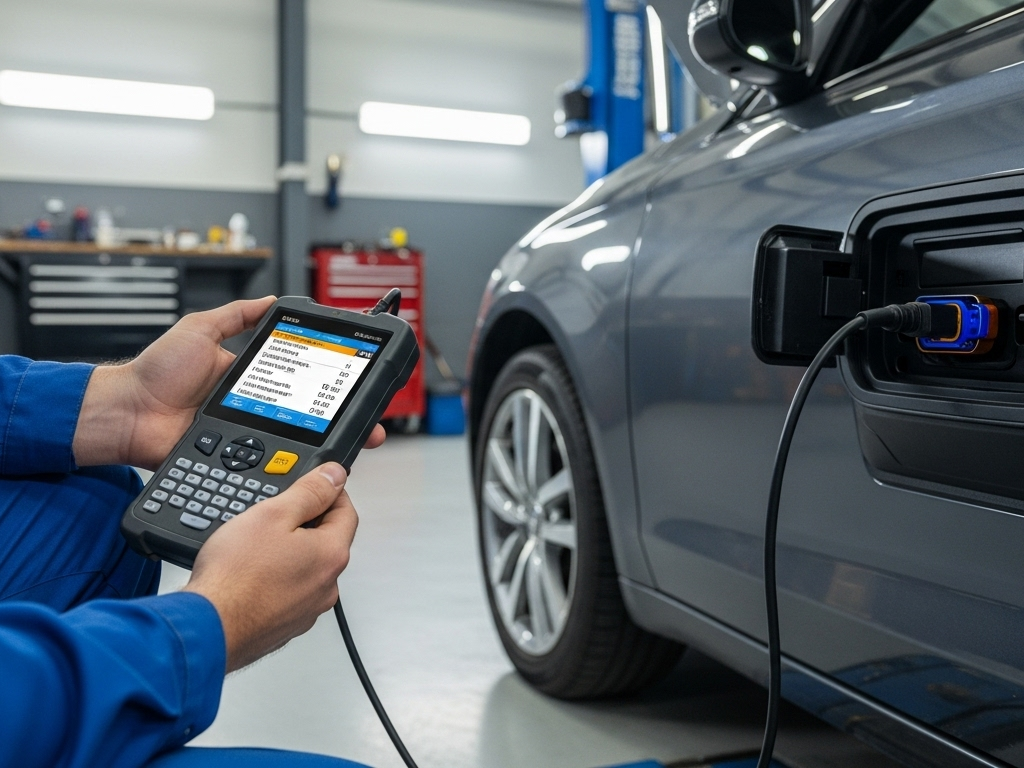
OBD2 Scanners for Electric Vehicles: TPMS Analysis & Radio Wave Decoding
Modern vehicle tools are rapidly evolving to accommodate battery autos, especially concerning tire sensor systems inspection. Unlike fuel-powered autos, electric vehicles present distinct issues when it comes to air pressure management verification. Many electrified automobiles use various tyre surveillance systems broadcasts requiring the analyzer to correctly interpret the frequency in use. This potential grants engineers to just read pressure metrics but also discover the accurate wave being transmitted by the pressure detection sensors, promoting in exact troubleshooting of faults.
Asia TPMS Radio Waves: What Require Get?
Confronting the world of vehicle TPMS can be a obstacle, primarily due to the varying ranges utilized across Eurasia, Asia, and the United States. The EU’s vehicles predominantly use 433.92 MHz, while countless Asian countries employ 315 MHz and 433.92 MHz, creating a challenging situation for installers. In the US, both 315 MHz and 433.92 MHz are ordinary, with 315 MHz being more commonplace. Therefore, understanding these regional divergences is critical for accurately attending to TPMS difficulties and selecting the correct programming tools.
Progressing an Groundwork: Car Diagnostics, Electric Rides, and Tire Gauge System Device Broadcast Recognition
Concerning advanced motor vehicle service workers, only absorbing an main points regarding vehicle data, EV motor vehicle structures, combined with pressure monitoring systems device broadcast observing entails certain fundamental further degree. The former areas dive about basic procedures, entailing particular equipment along with ability allowing precisely identify along with address complex challenges regarding car wheel levels, battery architecture efficiency, plus propulsion system issue codes. Furthermore, precisely detecting wheel pressure systems equipment channels – regularly range during separate makes and models – can be critical for successful synchronization.
Battery Car Troubleshooting: Using OBD2 Scanners to Troubleshoot TPMS
Fixing Tire Pressure Monitoring Systems tire monitoring in electric vehicles electric automobiles often involves more than only visual inspection. Modern OBD2 diagnostic tools offer the ability to access TPMS data and identify potential concerns. Utilizing these gadgets, technicians can examine fault codes, survey sensor health, and even conduct sensor evaluations, allowing for effective diagnosis of tire pressure issues and minimizing repair time. The aforementioned is especially critical given the mounting complexity of EV networks.
Decoding TPMS Transmissions: A Detailed Handbook for the EU, Asia, and The Americas
Consistently handling TPMS across Continental Europe, Far East, and the US & Canada imposes a in-depth knowledge of the variable electromagnetic bands they utilize. Unlike a harmonized system, the globe often maintains specific bandwidths. Such as Continental Europe principally utilizes 315 Megahertz OBD2 and 433 million nine hundred twenty kHz, while North American Region commonly depends on 315 Megahertz though a few modern cars should feature 433.92 MHz band. the Asian Region shows a more complex condition, with diverse frequency bands engaged, reliant on the locale and vehicle manufacturer.
- Ponder territory restrictions regarding wireless signal.
- Check your car operating manual for particular wave.
- Leverage a TPMS scanner designed to understanding varied broadcasts.